The first inspection on the Hernando County Admin Building lot in Brooksville wasn't on the asphalt — it was on the concrete forms. By August 28 the forms had passed and the concrete was in, and the crew was getting ready to take out the Lot A asphalt. That's the order a job like this runs in: you prove the concrete is set up right before any of it goes in the ground, because on a county lot the concrete is what people actually touch.
This is a working parking lot at a county administration building. People park here, walk the sidewalks, use the ramps, and get to a front door every weekday. When Hernando County BOCC hired Firm Foundations to restore the lot, the concrete and ADA scope wasn't a side item — it was the part residents and staff live with every day.
What went in the ground
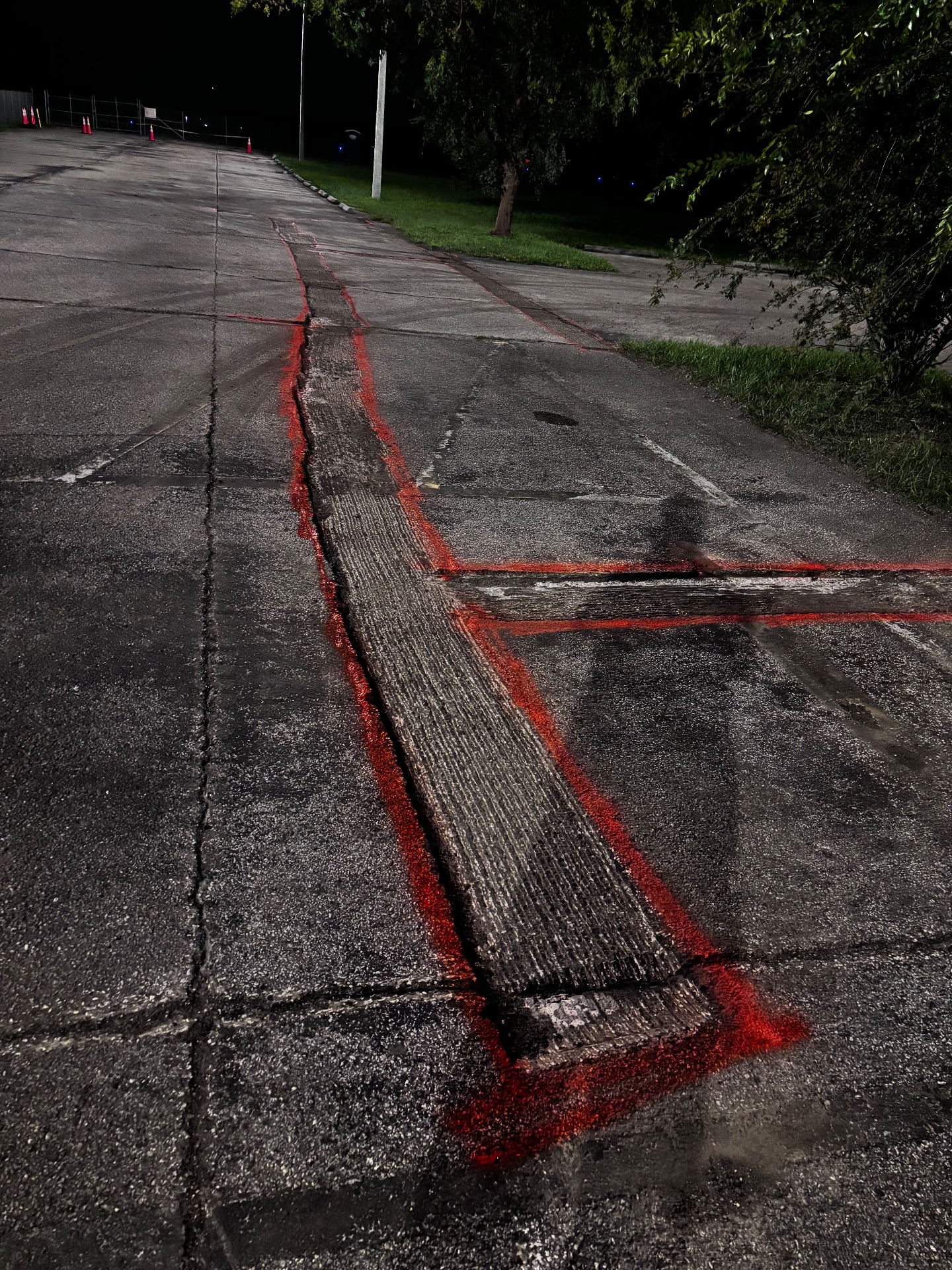
The concrete scope on this job covered the parts of a lot you walk on and the parts that keep it organized:
- New concrete sidewalk, and existing sidewalk replaced for elevation — so the walking surface sits at the right height and lines up flush
- ADA detectable warning mats on the sidewalks — the truncated-dome pads at the ramps that tell someone with low vision where the walk ends and traffic begins
- ADA signs and signposts installed
- New wheel stops set, with the old ones removed and hauled off
- A new concrete dumpster pad
- A roughly 12.5-foot run of 6-inch schedule 40 PVC culvert pipe, tapered, with fill dirt and sod
None of that is glamorous. All of it is the difference between a lot that meets code and serves everyone, and a lot that technically has pavement. The detectable warning mats and the sidewalk elevation work are accessibility, plain and simple — they're the reason someone using a wheelchair or a cane can cross the lot the same as anyone else.
Building in order, cleaning up after
The sequence matters. The concrete had to be formed, inspected, and placed before the lot work around it moved forward. The old wheel stops came out before the new ones went in. The culvert pipe went in with its fill and sod so the ground around it was finished, not left open.
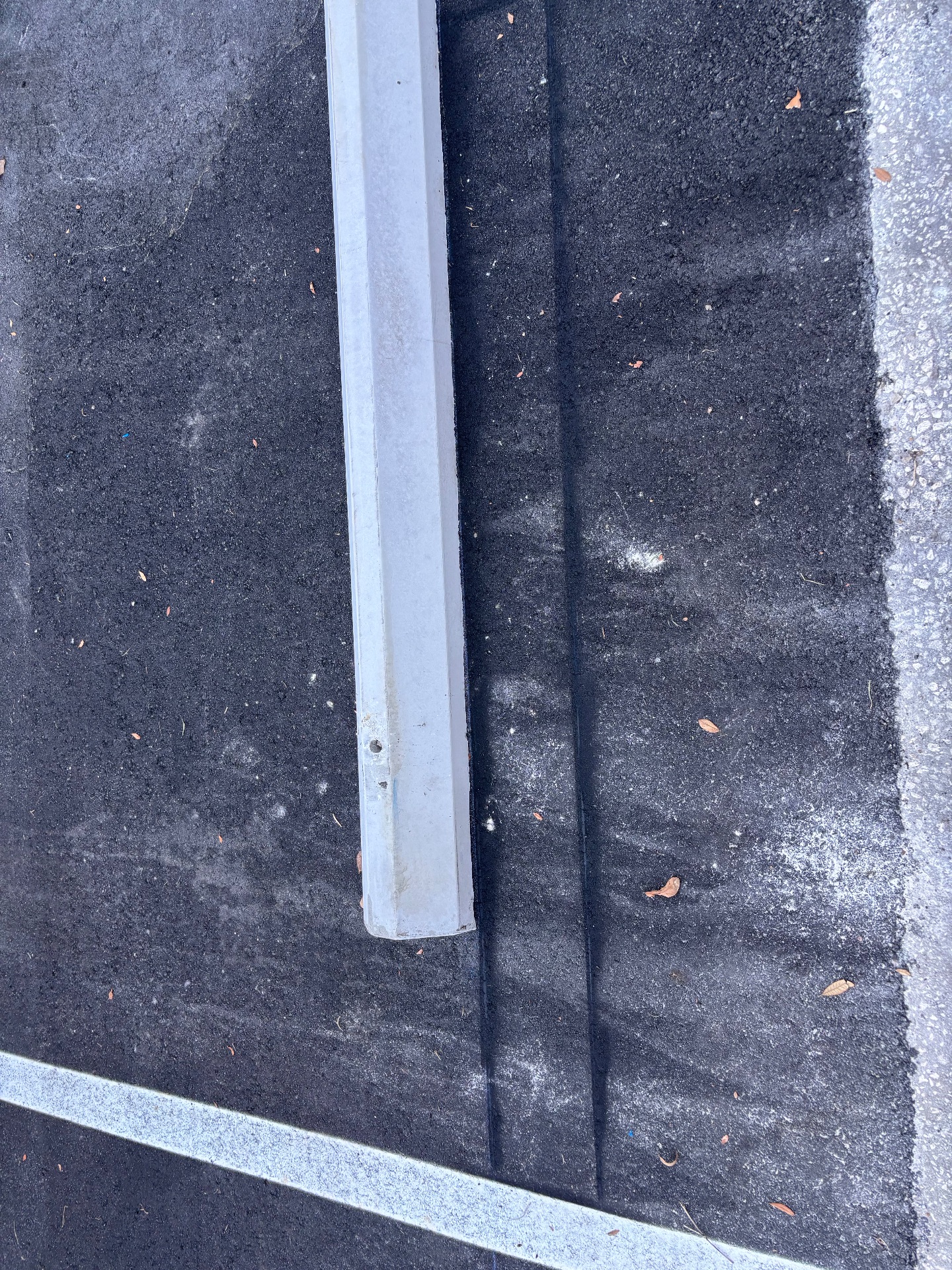
The last piece people notice — and the one crews are tempted to rush — is the cleanup. On this job the sod was completed on September 23, and the trash left the site in five dump runs. A county lot that's been under construction for weeks only reads as "done" to the people using it when the mess is gone and the ground is green again. Leaving a public site clean isn't a courtesy here; it's the standard. The residents and staff walking past every day didn't hire us, and they still deserve a site that's safe and tidy while the work goes on around them.
Why we show the concrete and the accessibility work
A parking lot restoration gets talked about as paving. But on a lot where the public comes and goes all day, the concrete flatwork and the ADA details are what a property manager or an agency gets held to. Sidewalks at the right elevation. Warning mats at the ramps. Signs posted. Wheel stops that keep cars off the walk. That's the part that passes an accessibility review, and it's the part a resident feels underfoot.
That's why we plan it, scope it, and document it as its own piece of the job — not an afterthought bolted onto the asphalt.
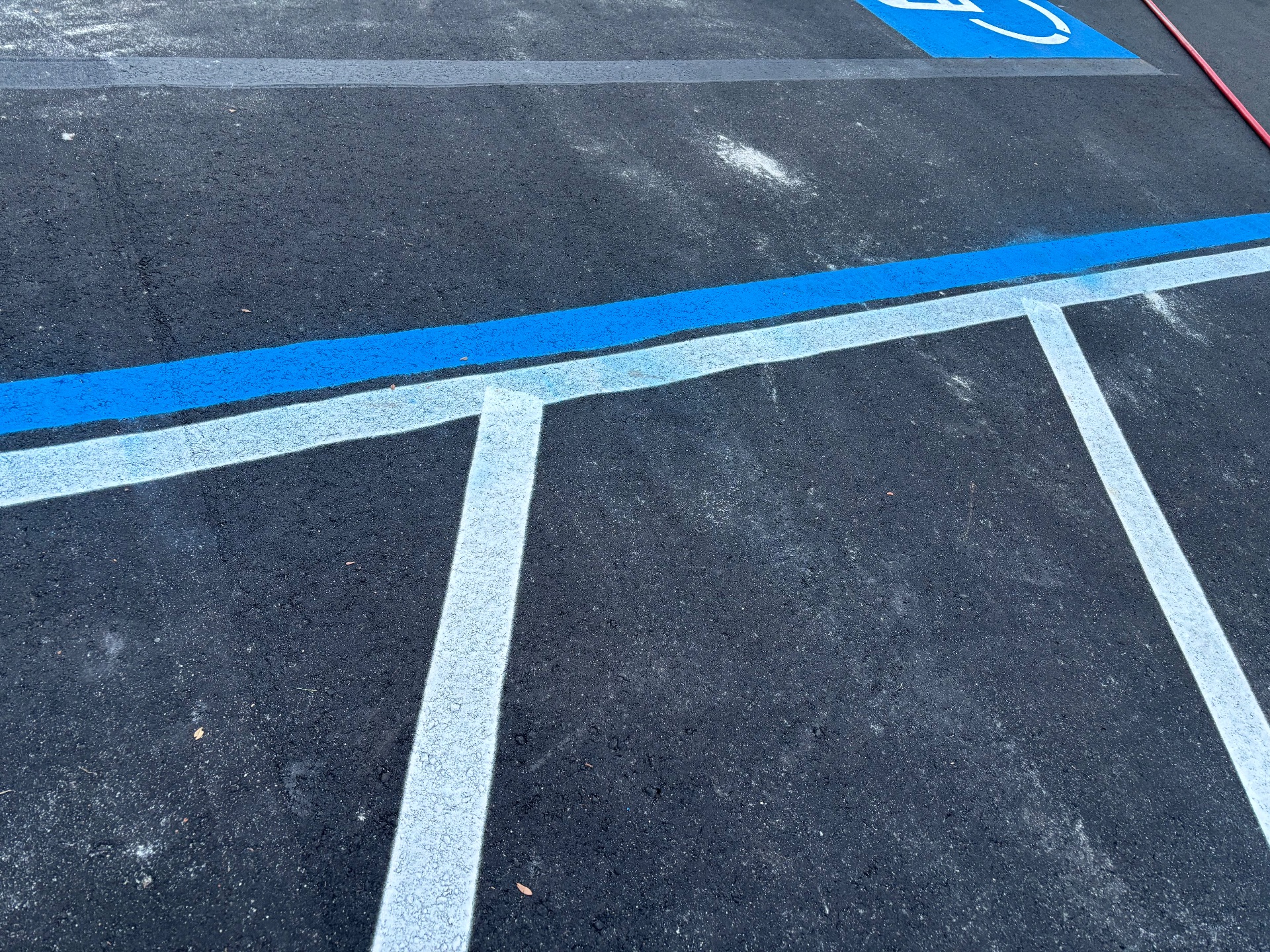
If you manage a commercial or public lot in Pinellas, Pasco, Hernando or Hillsborough and you're not sure your sidewalks, ramps and ADA details would hold up to a walk-through, we'll come out and look. A walk of your property, in person, is the next step — we'll tell you what's compliant, what isn't, and what it would take to fix it.