At a community in Tampa, every driveway is separated from the next by a strip of brick pavers. Each strip is 2 feet wide and runs 20 to 34 feet long. Over the years, many of them had settled and gone uneven.
The crew didn’t fix them by laying brick. They started by pulling it all up.
That’s the part most people never see. A paver strip that dips didn’t fail at the surface. It failed underneath. The base shifted, washed out or packed down, and the brick followed it. The only fix that holds is to take the pavers out, rebuild what’s below them, and set the brick back down level.
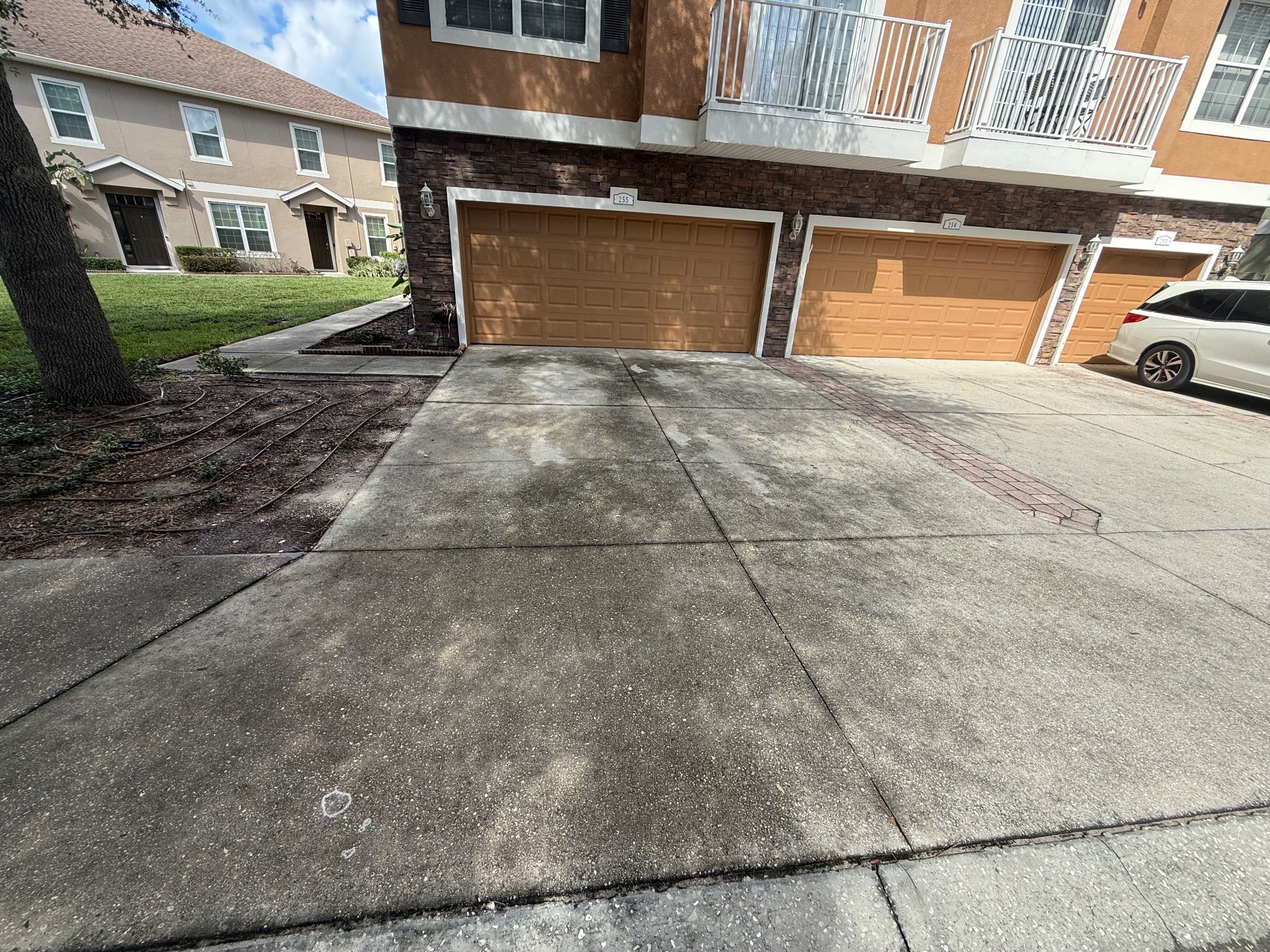
What each strip took
Lifted every paver out of the section. Scraped out the old debris under the brick. Brought in new base material and spread it. Tamped the base, added more, and tamped it down level. Set the pavers back in. Sanded the joints with water and a broom to lock them in. Cleaned up each site before moving on.
None of that is glamorous. But every step is the reason a strip sits flat instead of sinking again in a year. The brick you see is the easy part. The base is the job.
Working around people who live there
This is an occupied community. Residents are home and cars come and go all day. So the crew worked one strip at a time. A section came up, got rebuilt and went back down before the next one started, and each site was cleaned as they went, not at the end of the week.
Done, and the part you check later
Every strip is reset now. The real test of a paver reset is the next hard rain, and the rain after that. A strip that was pulled, re-based, tamped and reset right stays flush and sheds water. One that only got the brick picked up and dropped back on the same tired base looks fine for a few weeks, then dips again in the same spot.
If your property has pavers going uneven
If you manage a community or commercial property where paver strips, borders or walkways have started to settle, with a dip here, a high corner there, or a spot that holds water after every storm, the fix is almost always below the surface.
The next step is a walk-through. We’ll look at the sections that have moved and tell you straight whether it’s a base problem, a surface problem, or something to watch. No guessing from a photo.