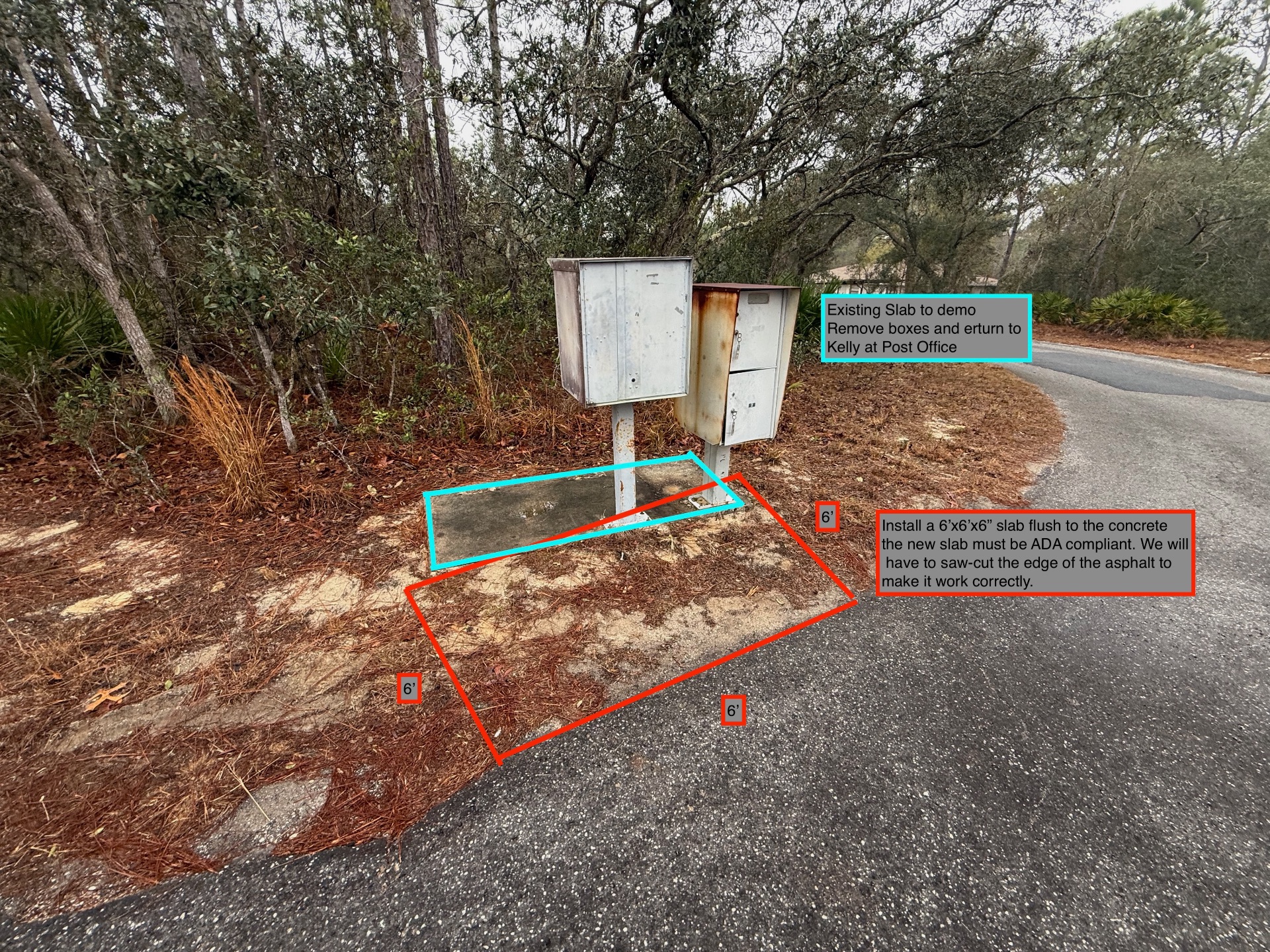
The first thing the crew did on this job in Homosassa wasn't pour concrete. It was pull the existing mailbox cluster off the old pad and get it out of the way. The residents who come by every day for their mail still needed those boxes somewhere, so the cluster came off first, the old pad came out second, and only then did the real work start.
That was a Monday. By the end of that day the old slab was demoed, the ground was prepped, the forms were set, and a new pad was poured. One day, start to finish, for the part most people never think about — the flat gray slab under the boxes they walk up to without looking down.
Then the crew left it alone.
Why we come back a second time
Here's the part that separates a mailbox pad done right from one done fast: you don't set the boxes the same day you pour. Fresh concrete needs time. Bolt the heavy cluster hardware down into a slab that hasn't cured, and you've built in a problem you won't see until later.
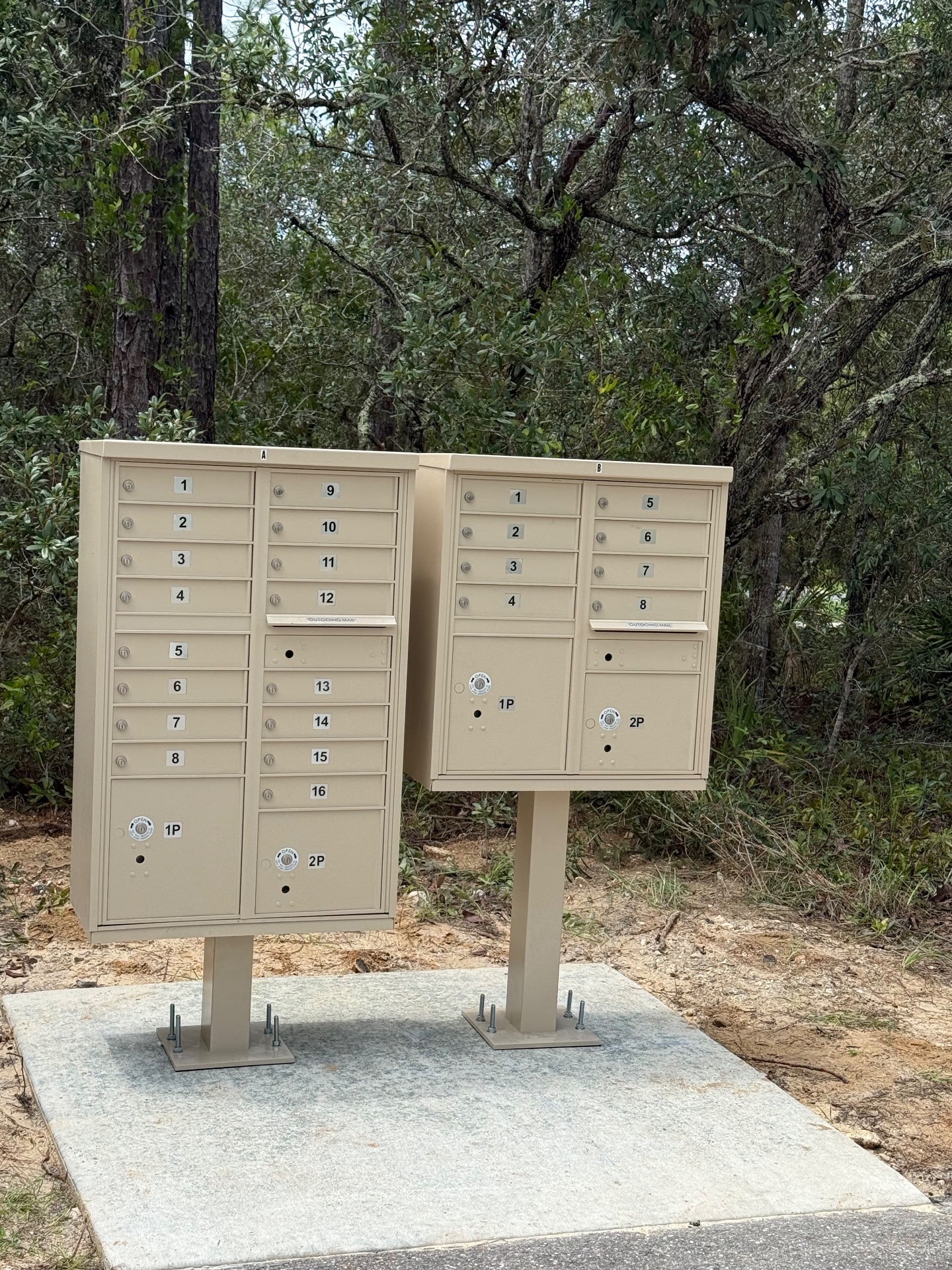
So this was a two-trip job by design. Pour on the first trip. Come back on the second, once the slab had the days it needed, and set the cluster boxes onto the finished pad. On that return trip the crew installed two cluster boxes, and it came together clean.
It sounds like a small thing. It isn't. A mailbox cluster takes a beating: daily use, every resident on the loop, hardware that has to stay tight and level for years. The slab under it is the whole reason the boxes don't shift, rock, or tilt over time. Rush the slab and you're redoing it. Give it the time it needs and it just works — which is exactly what you want from the part of a property nobody is supposed to notice.
What "we document the work as it goes" actually looks like
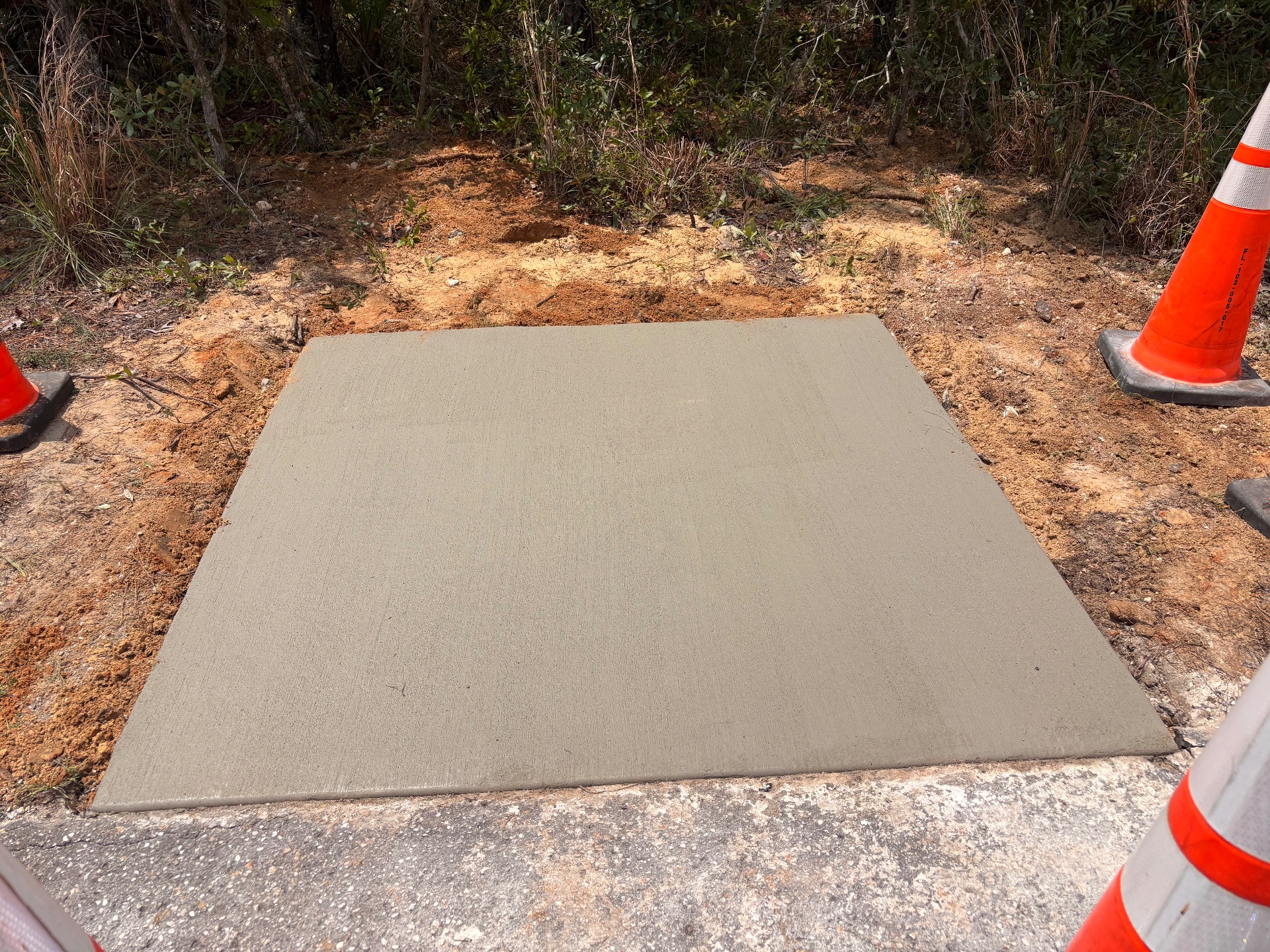
On this job the record tells the story in order: boxes removed, old pad demoed, ground prepped, forms set, slab poured — all on the first day. Photos uploaded. Then a note that the crew would wait to call the job complete until the cluster boxes were set, because that's what finishing the job actually means. Then the return trip, the boxes installed, the job closed out.
That's not us being fussy for the sake of it. When you manage a property, you want to know the work was done in the right order and nothing got skipped to hit a date. A pad that looks fine on day one can still be a pad that was loaded too soon. The way you avoid that is to build the job around the concrete's timeline instead of your own calendar — and to write down what happened, step by step, so there's a record of it.
For a mailbox cluster on a community, that discipline is the difference between a pad that holds for years and one that starts to show it a season or two in. The boxes are the visible part. The slab is the part that decides how long the visible part stays right.
If you've got concrete that takes daily use
Mailbox clusters, approaches, pads, walkways — the flatwork on your property that everyone uses and nobody looks at — all of it lives or dies on what's underneath and how much time it got before it went to work.
If you manage a property around Homosassa or anywhere in our Tampa Bay service area and you've got a pad that's cracking, rocking, or just past its years, the next step is simple: we'll come walk it with you. No guessing from a photo — eyes on the concrete, so you get a straight answer about what it needs and what it doesn't.